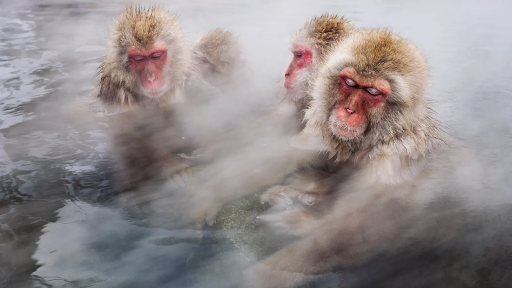
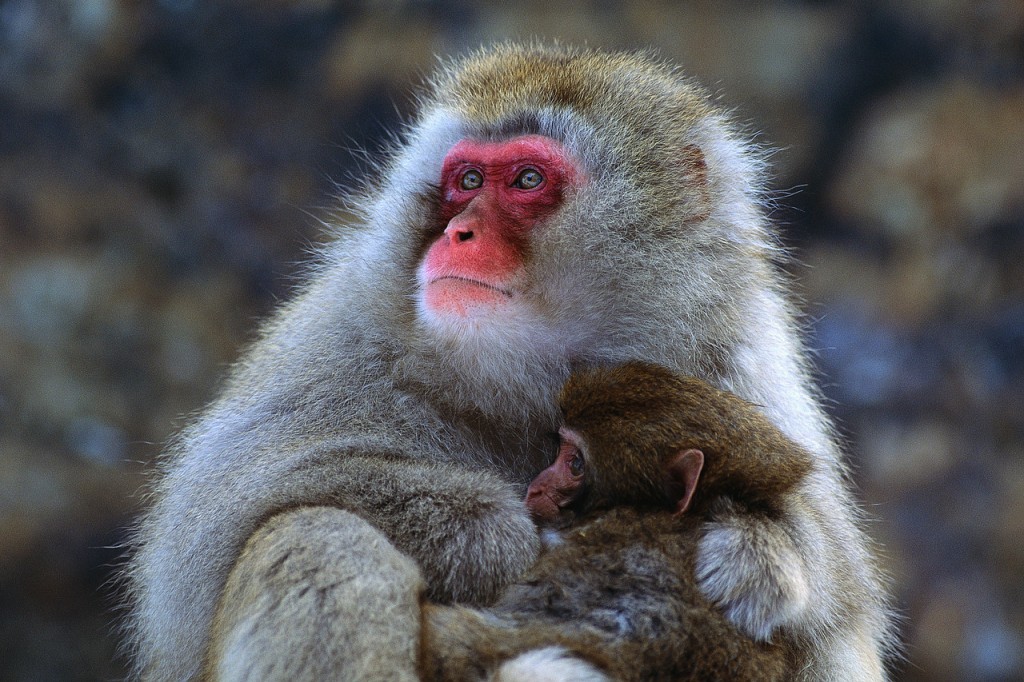
The Japanese macaque (Macaca fuscata) is a primate endemic to the Japanese archipelago.
It is widely distributed across the territory, from northern Honshū to Kyūshū. There is a single subspecies, Macaca fuscata yakui, found on Yakushima, at the southernmost limit of its range. It is the primate living in the northernmost and coldest natural habitat, earning it the nickname “Snow Monkey”.
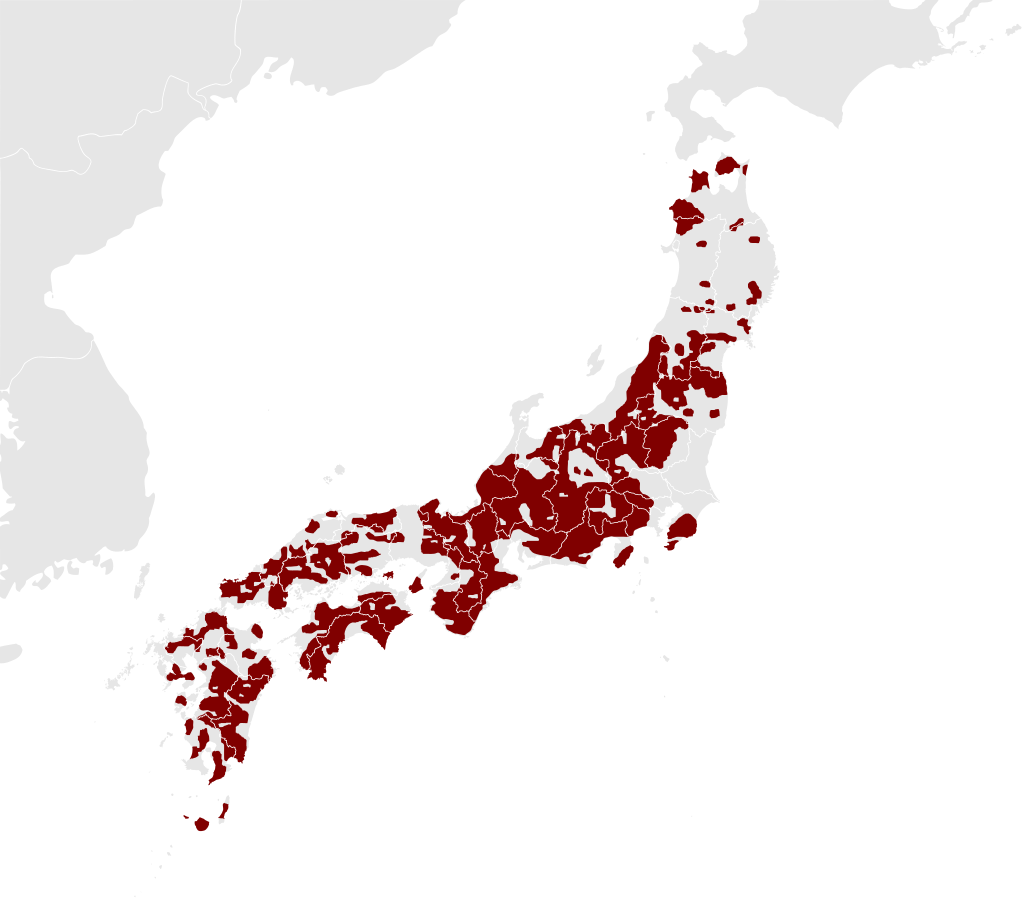
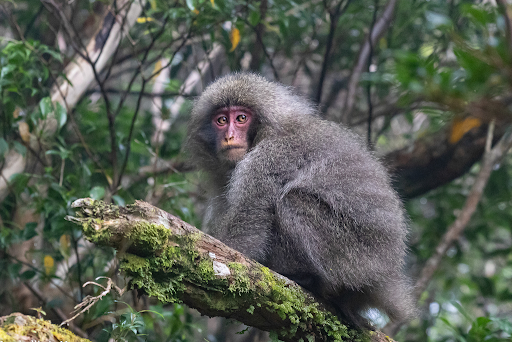
Yakushima, the only home of the subspecies Macaca fuscata yakui.
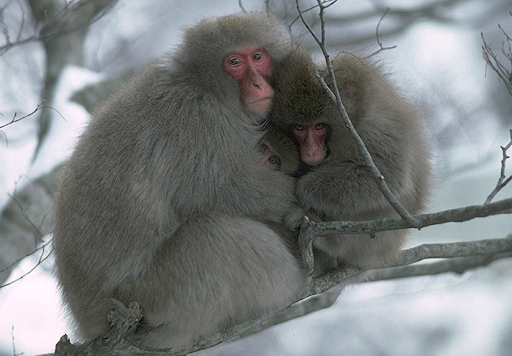
Shimokita Peninsula, where the monkey population has been designated a “Natural Monument” for being the northernmost primate group in the world
Takasakiyama, where the monkey population has been designated a “Natural Monument”
Takato, where the monkey population has been designated a “Natural Monument”
Mount Minoh, where the monkey population has been designated a “Natural Monument”
Mount Gagyu, where the monkey population has been designated a “Natural Monument”
Koshima, where the monkey population has been designated a “Natural Monument”
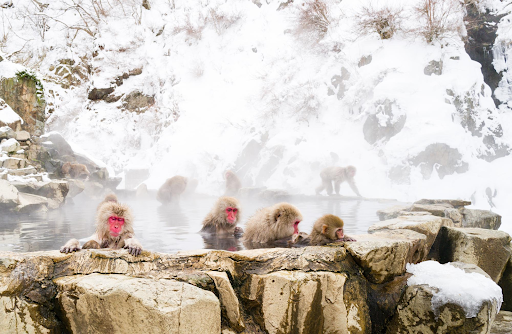
Jigokudani Monkey Park, with hot springs visited by monkeys
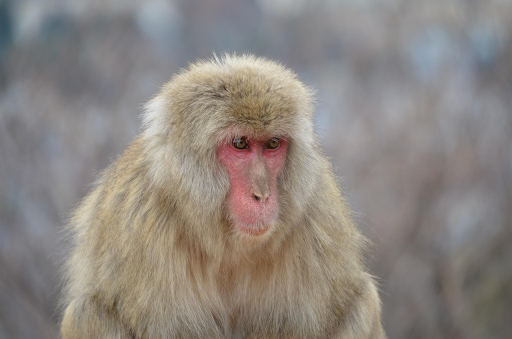
Iwate Prefecture, where intensive hunting has reduced populations to a handful of isolated groups at the mountain peaks.
Tanegashima, where the species is regionally extinct.
Ibaraki Prefecture, where the species is regionally extinct.
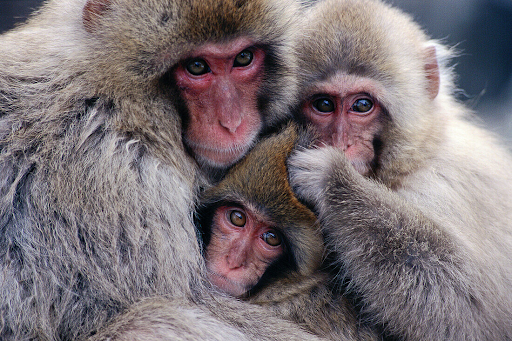
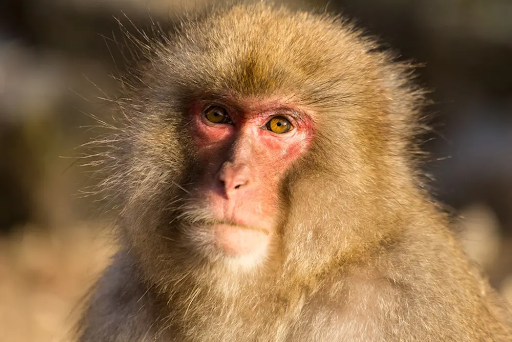
The Japanese macaque is a medium-sized primate, standing 50 to 60 cm tall and weighing about 10 kg on average. Its fur is particularly thick, allowing it to withstand temperatures below −20 °C. Only the hands, face, and rump are hairless, revealing reddish skin. Their morphology, however, varies depending on the population. Individuals living in more mountainous and colder areas are generally larger, heavier, and have thicker fur than those living in warmer regions.
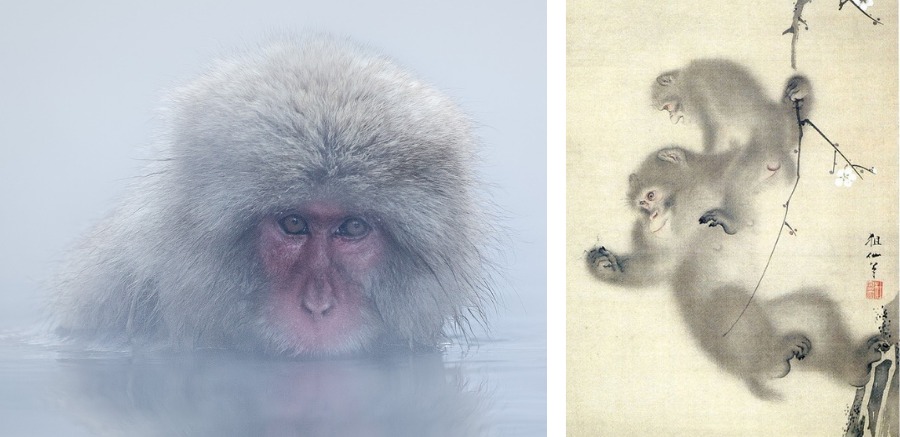
Japanese macaques are found in forest environments. They inhabit both the subarctic deciduous forests of northern Japan and the subtropical evergreen forests of the south. They are diurnal primates with a semi-terrestrial lifestyle. Some groups are known to visit hot springs in winter to warm themselves, as is the case in Jigokudani Monkey Park.
The Japanese macaque is mainly vegetarian and frugivorous, though it also regularly eats insects. It has a lifespan of 25 to 30 years, which is longer than that of its closest relatives. This long lifespan is partly due to the low number of natural predators, with the Mountain hawk-eagle (Nisaetus nipalensis) being the only one remaining since the extinction of the Japanese wolf (Canis lupus hodophilax).
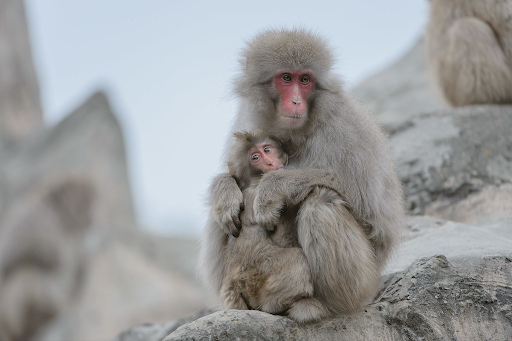
These primates form mixed groups of several dozen individuals with complex social structures. Japanese macaques spend most of their time grooming one another, that is, removing parasites from their fur. This practice strengthens social bonds within the group and is observed more frequently among individuals of higher rank. Numerous studies have also been conducted on their communication, which is complex and based on vocalizations that vary in tone depending on the situation.
In Japanese culture, macaques have long been considered “kamis (神),” spirits revered in the Shinto religion. Because of their humanoid appearance and unusual behavior, these primates represented both the dangers of the wild world and the messengers of mountain gods. Under the influence of Hindu and Buddhist cultures, the perception of Japanese macaques evolved to that of protective spirits warding off evil and disease. Rural populations at the time customarily fed these animals, believing they brought protection to their communities and crops.
Since humans arrived in the Japanese archipelago 38,000 years ago, Japanese macaques have been threatened by hunting and habitat destruction. However, these threats have decreased since the end of World War II. With the disappearance of the Japanese wolf in 1905, the slowdown of intensive forest exploitation, and the ban on hunting in 1947, macaque populations have continued to grow.
However, the increasing macaque populations and growing urbanization have led to closer contact between these animals and human activities. Today, they are known to cause considerable damage to crops of all kinds. In 2019, damages caused by the species were estimated at 900 million yen, equivalent to more than 7 million euros. This makes it the third most financially damaging species to crops, after the sika deer (Cervus nippon) and the Japanese wild boar (Sus scrofa leucomystax).
Populations are doing well nationwide, with a total estimate of 150,000 individuals in 2011. The species appears on the IUCN Red List under the “Least Concern” category, but the situation varies greatly by region. In the mountain ranges of Iwate Prefecture, intensive hunting has reduced populations to a handful of isolated groups in the highest peaks. The species is regionally extinct on Tanegashima, an island near Yakushima, as well as in Ibaraki Prefecture.
New threats have emerged, endangering the species’ future. Cedar and pine forests have multiplied to meet forestry demands, but these do not suit the macaques’ habitat requirements. Added to this is the significant damage caused by sika deer to the understory vegetation, especially on Yakushima. Furthermore, hybridization cases are increasing with the rhesus macaque (Macaca mulatta) and the Formosan macaque (Macaca cyclopis), respectively imported from Central Asia and Taiwan.
Since the mid-20th century, numerous conservation measures have been implemented for the Japanese macaque. National and prefectural natural parks ensure the protection of many individuals throughout the country. Moreover, six populations in particular have been designated as “Natural Monuments,” in recognition of their remarkable ecological and cultural value. Today, conservation efforts focus on controlling exotic species that may hybridize with the Japanese macaque.
Managing the Japanese macaque population is a complex issue. The return of the species is desired in some regions, while its abundance causes damage in neighboring ones. This situation illustrates the importance of considering local ecological and social dynamics to implement appropriate conservation measures that ensure the species’ long-term survival and balance with human communities.