
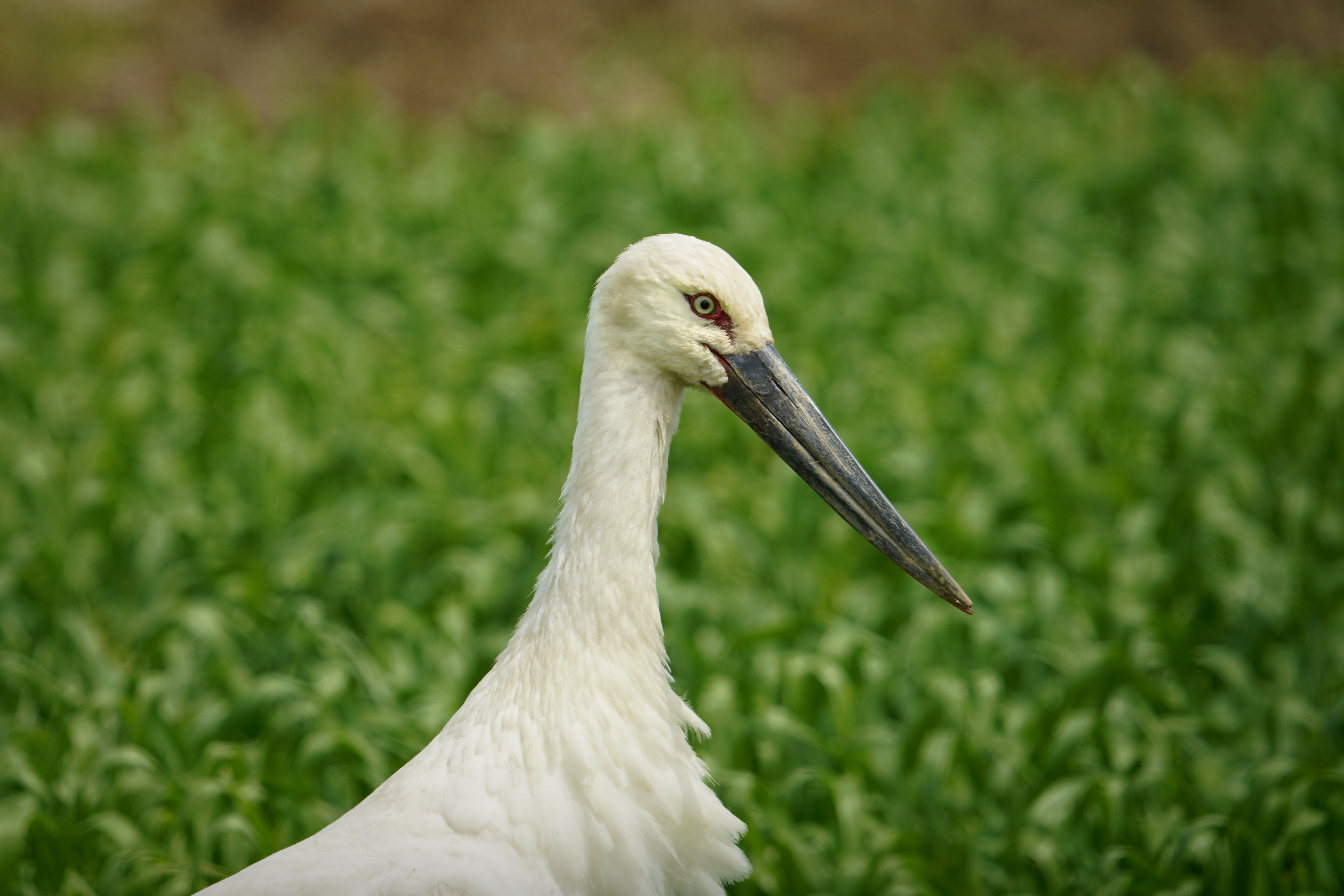
Encountering the Oriental Stork, a true symbol of the city of Toyooka in Hyogo Prefecture.
The Oriental Stork: Biology and Ecology
The Oriental Stork (Ciconia boyciana) is a large wading bird belonging to the Ciconiidae family. Distributed across East Asia, this species primarily inhabits wetlands such as marshes, floodplains, rivers, and certain agricultural landscapes. It closely resembles the European White Stork (Ciconia ciconia), from which it differs notably by its larger size, massive black bill, and red skin around the eyes.
Adults generally measure between 110 and 120 cm in height, with a wingspan that can reach two meters. No marked sexual dimorphism is observed between males and females.
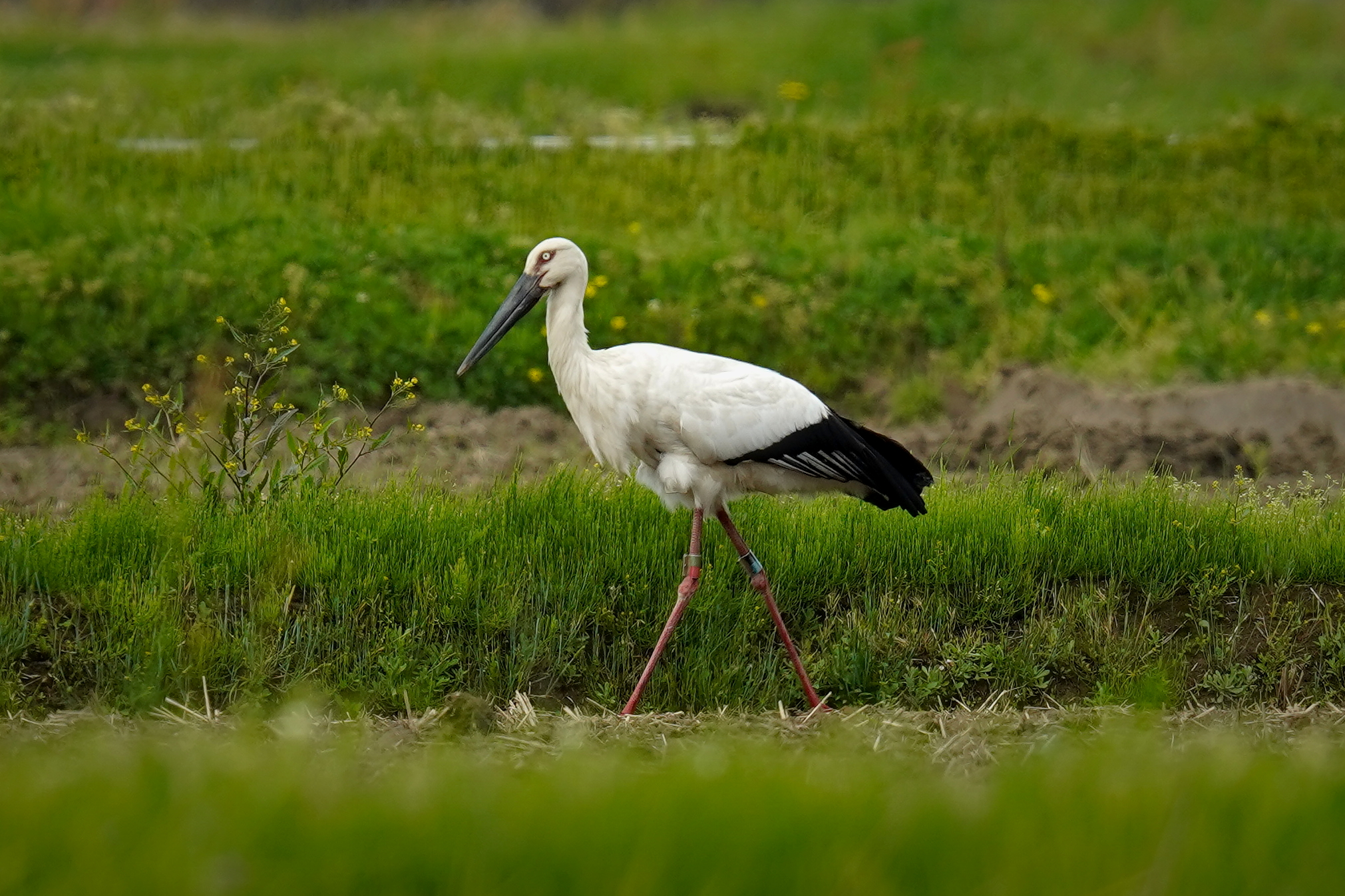 Photograph of an Oriental Stork
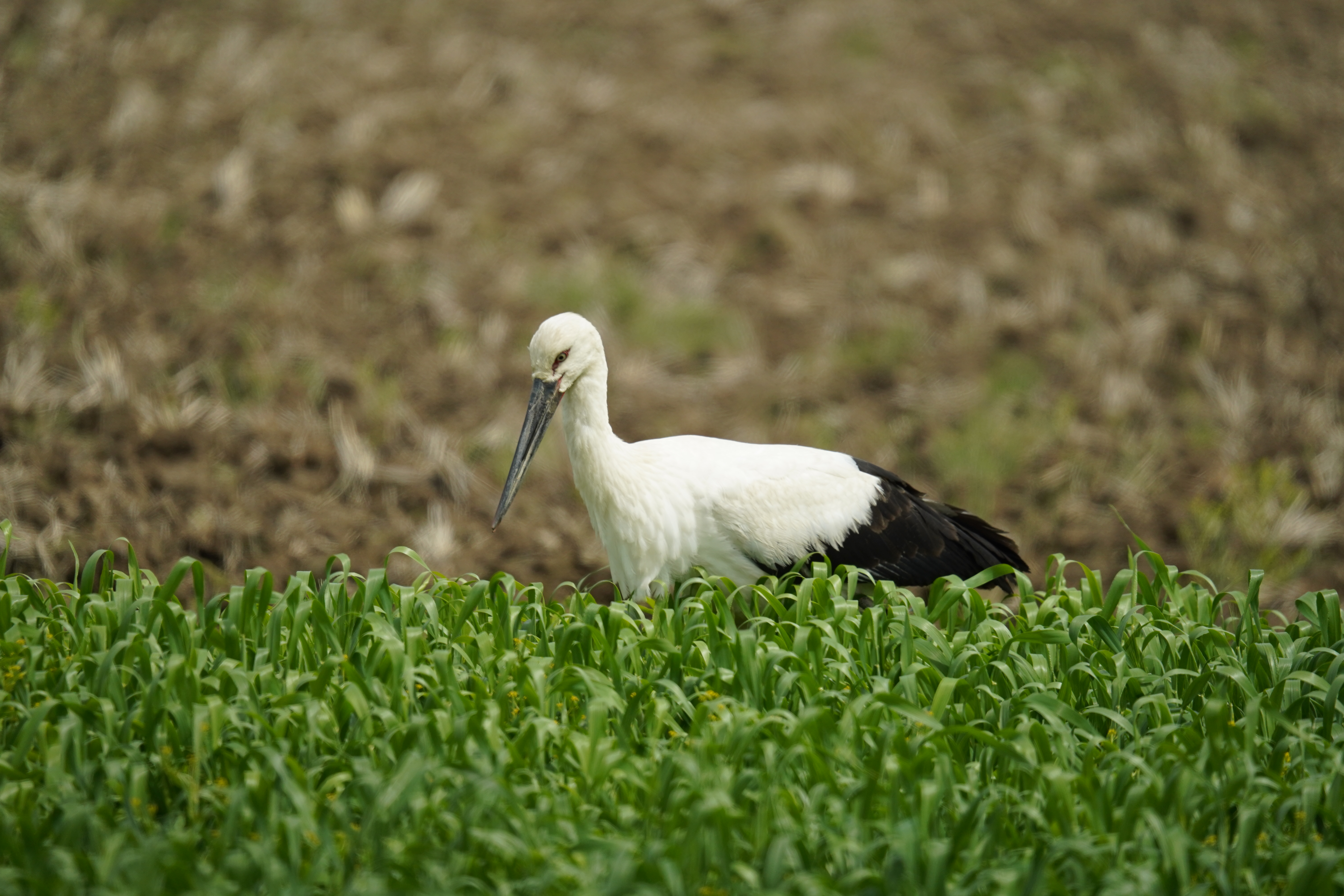
The Oriental Stork is closely dependent on wetland environments. Its diet mainly consists of fish, amphibians, reptiles, insects, and other small aquatic animals. As a top predator within these ecosystems, it plays an important role in regulating prey populations. Its presence therefore also serves as an indicator of the ecological quality of the habitats it occupies.
In Japan, the species has a particular relationship with rice paddies. When these are kept flooded and managed in ways that benefit biodiversity, they can provide substitute habitats for natural wetlands. A wide variety of aquatic organisms find refuge there and provide an essential food resource for the storks. This ability to make use of agricultural landscapes has made the Oriental Stork an emblematic species of the possible coexistence between agriculture and biodiversity.
From Decline to Extinction in Japan
Until around 1900, the Oriental Stork (Ciconia boyciana) was widely distributed throughout the Japanese archipelago. The traditional rural landscape known as “satoyama” — consisting of rice paddies, wetlands, waterways that remained largely natural, and forests — provided an environment perfectly suited to the stork’s feeding and breeding requirements.
However, with the beginning of the Meiji era (1868–1912), the situation gradually began to change. The lifting of hunting restrictions became the first major factor in the decline of this species.
Breeding sites were also gradually lost. Storks traditionally built their nests in the crowns of large Japanese red pine trees (Akamatsu). During the Second World War (1939–1945), however, many of these trees were cut down to provide materials and fuel for the war effort, reducing the number of available breeding sites.
After the war, the modernization of agriculture had a major impact on the stork’s food resources. The increased use of pesticides containing highly toxic organic mercury led to mercury accumulation in storks — which were at the top of the food chain — through fish, amphibians, and other aquatic organisms, reducing their reproductive capacity. In addition, as the population declined, inbreeding increased, further impairing breeding success and accelerating the species’ decline.
 Photograph of a channelized waterway
Despite various conservation measures implemented even before the species became extinct, the decline could not be halted, and in 1971, the last wild individual was captured in Toyooka, Hyogo Prefecture, marking the disappearance of the Oriental Stork from the wild in Japan. This event holds particular significance in the history of biodiversity conservation in Japan.
Even after the extinction, pressure on the species’ former habitat continued. Land consolidation projects aimed at improving agricultural land, as well as the channelization and concreting of riverbanks for flood control purposes, led to a considerable decline in aquatic life along waterways — further degrading the environment that would later be needed to allow the species to be reintroduced.
Toyooka: A Model of Ecological Restoration
The restoration of Oriental Stork populations in Toyooka is based on a fundamental principle: the long-term conservation of the species cannot be achieved without restoring the ecosystems on which it depends.
Habitat Restoration
Conservation efforts were therefore not limited to captive breeding and the reintroduction of individuals. A broader transformation of the landscape was undertaken to improve the ecological quality of agricultural areas.
Three main types of biodiversity-friendly practices are now encouraged:
- reducing pesticide use;
- promoting organic farming;
- maintaining flooded rice paddies throughout the year in order to preserve a semi-natural wetland habitat.
 Photograph of a former rice paddy transformed into a semi-natural wetland
Studies conducted in Toyooka have shown that these different habitats play complementary roles depending on the stages of the storks’ life cycle. During the breeding season, organic or lightly treated rice paddies generally provide the most abundant food resources. During winter, permanent semi-natural rice paddies become particularly important refuge areas when other rice fields are drained.
Species conservation is therefore approached through the restoration of the entire food chain. Changes to agricultural calendars have been introduced in particular to promote the development of the organisms on which the storks depend. Keeping certain fields flooded for longer periods, for example, allows tadpoles to complete their development, while delaying certain harvests supports the life cycles of many insects.
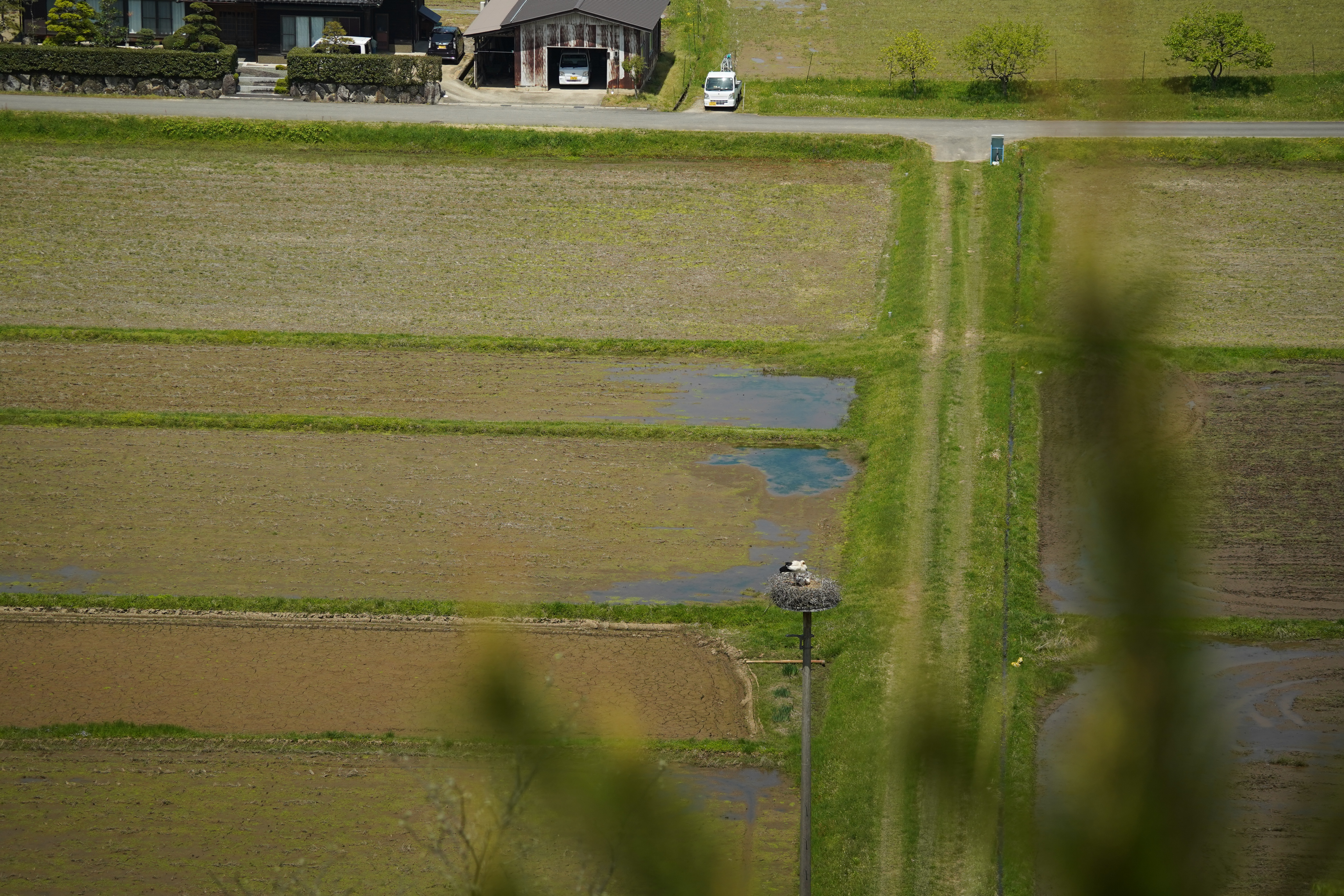
This approach is complemented by educational, economic, and territorial initiatives. Artificial nesting platforms have been installed in different areas to increase breeding opportunities. Mounted on top of tall poles, they reproduce the nesting sites naturally sought by Oriental Storks while protecting them from major disturbances and predators. These structures compensate for the loss of mature trees, which were once used for nest building, and therefore encourage the establishment of new breeding pairs in suitable areas.
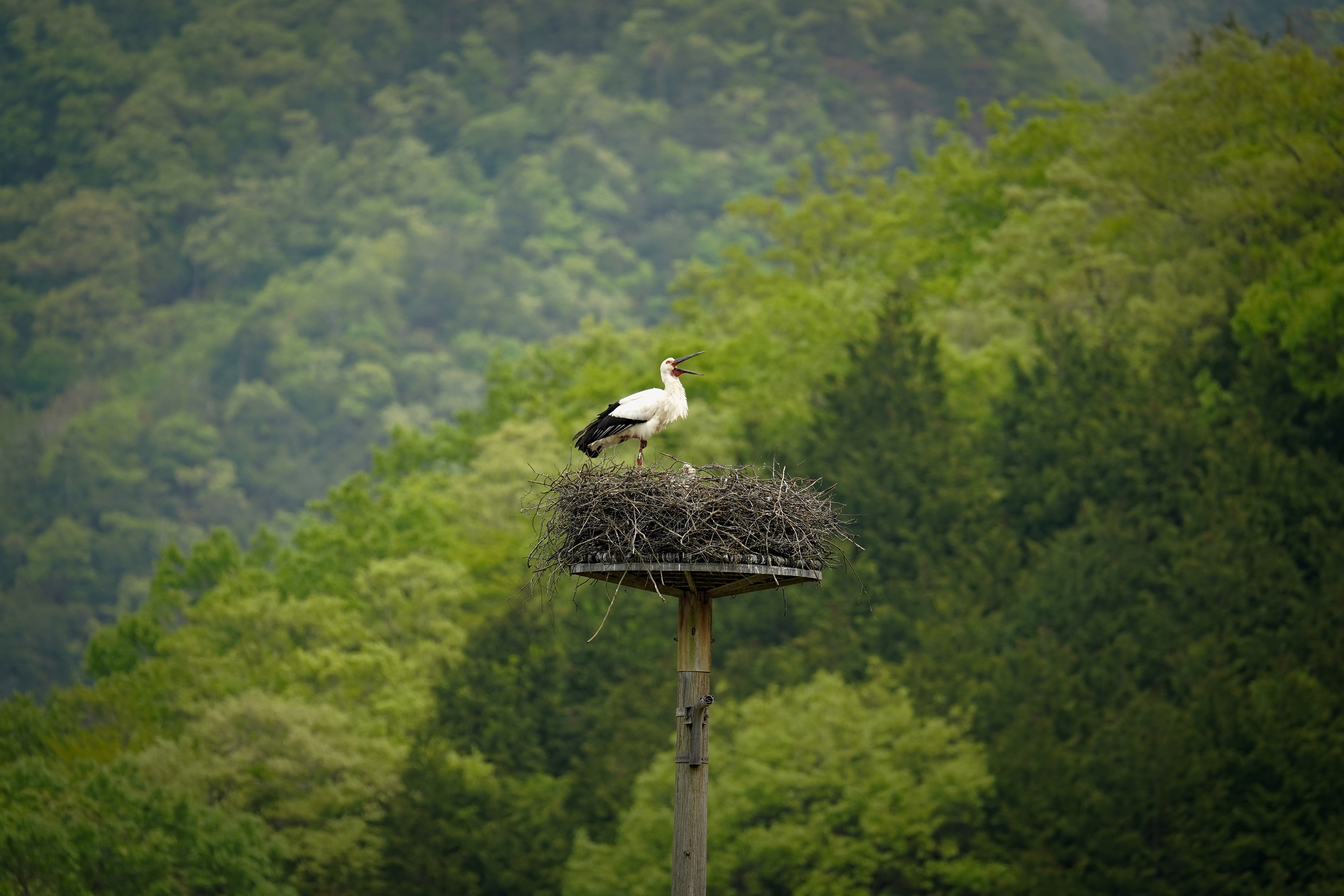 Photograph of an Oriental Stork using a pole for breeding
Awareness-raising initiatives are carried out among the local population to promote a better understanding of biodiversity issues. At the same time, the image of the stork has become a strong symbol of Toyooka’s identity and now contributes to the region’s tourism appeal.
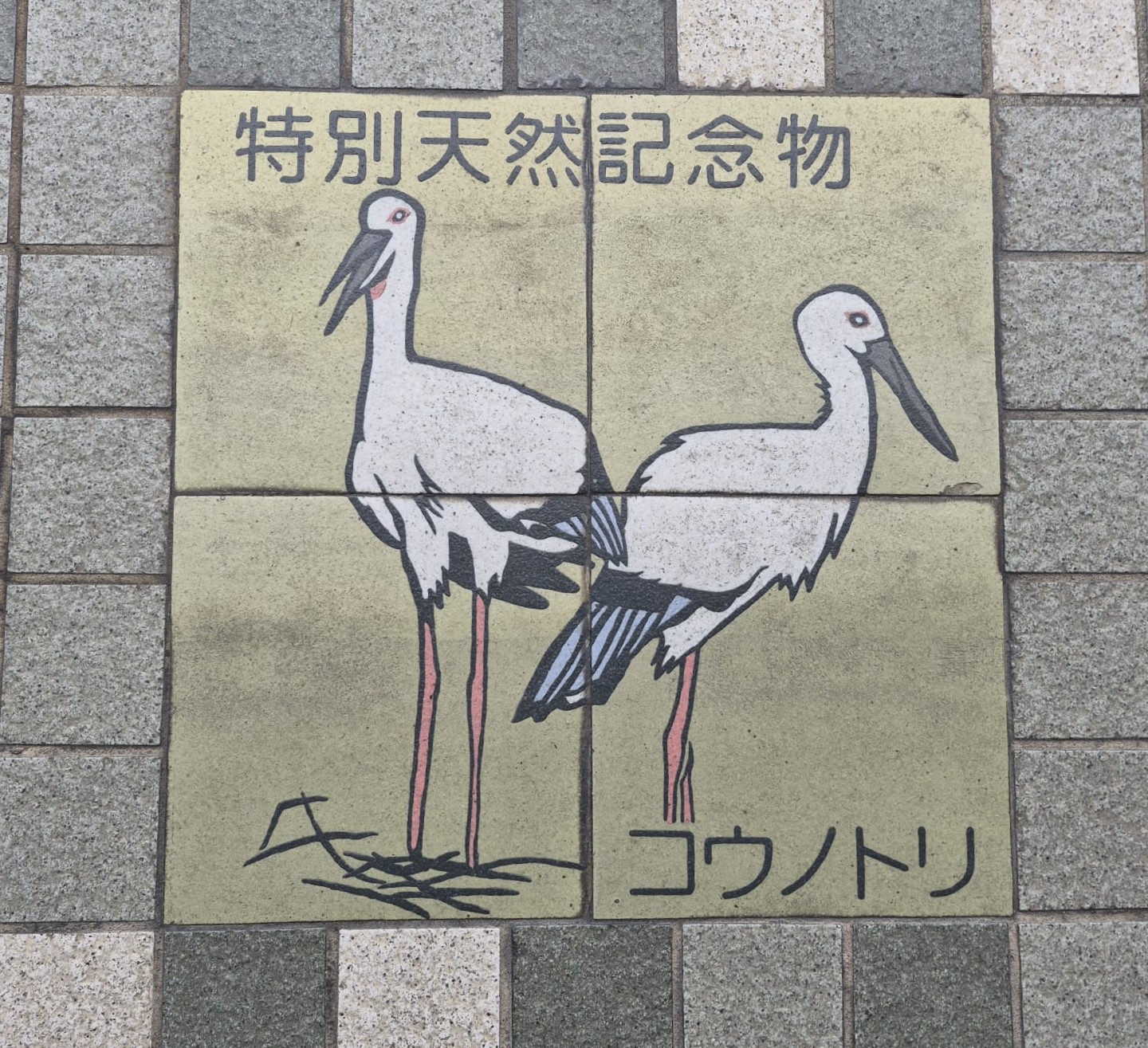 Representation of an Oriental Stork on the pavement of Toyooka
The results demonstrate the success of this strategy. Following the first reintroductions carried out in 2005, the population gradually increased, and new instances of breeding in the wild were observed. In 2016, more than 300 storks originating from the conservation program were recorded.
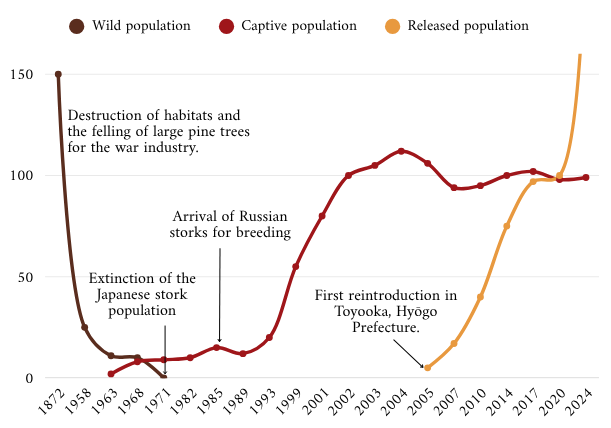
Population Monitoring
This success also relies on rigorous scientific population monitoring. During each breeding season, nests are monitored to record breeding pairs, the number of eggs laid, and the number of young that successfully fledge. A large proportion of chicks are fitted with identification bands before fledging, allowing individual birds to be identified throughout their lives. This banding provides valuable information on movements, survival, breeding success, juvenile dispersal, and exchanges between different populations. These data make it possible to assess the effectiveness of conservation measures and adapt species management according to the results obtained.
Monitoring has also revealed a change in the migratory behavior of Oriental Storks reintroduced to Japan. While continental populations undertake seasonal migrations between their breeding grounds in northeastern Asia and their wintering areas farther south, individuals originating from the Toyooka program are now predominantly sedentary. The availability of food resources throughout the year in restored agricultural landscapes, combined with the lack of need to travel long distances, allows the storks to remain in Japan. They mainly undertake local or regional movements, while juveniles may disperse over several hundred kilometers before settling in a new breeding area.
The experience in Toyooka demonstrates that a locally extinct species can be restored when the causes of its decline are addressed and the habitats necessary for its survival are restored. The Oriental Stork has thus become a symbol of the ecological restoration of Japanese agricultural landscapes and of the possibility of sustainable coexistence between human activities and biodiversity.