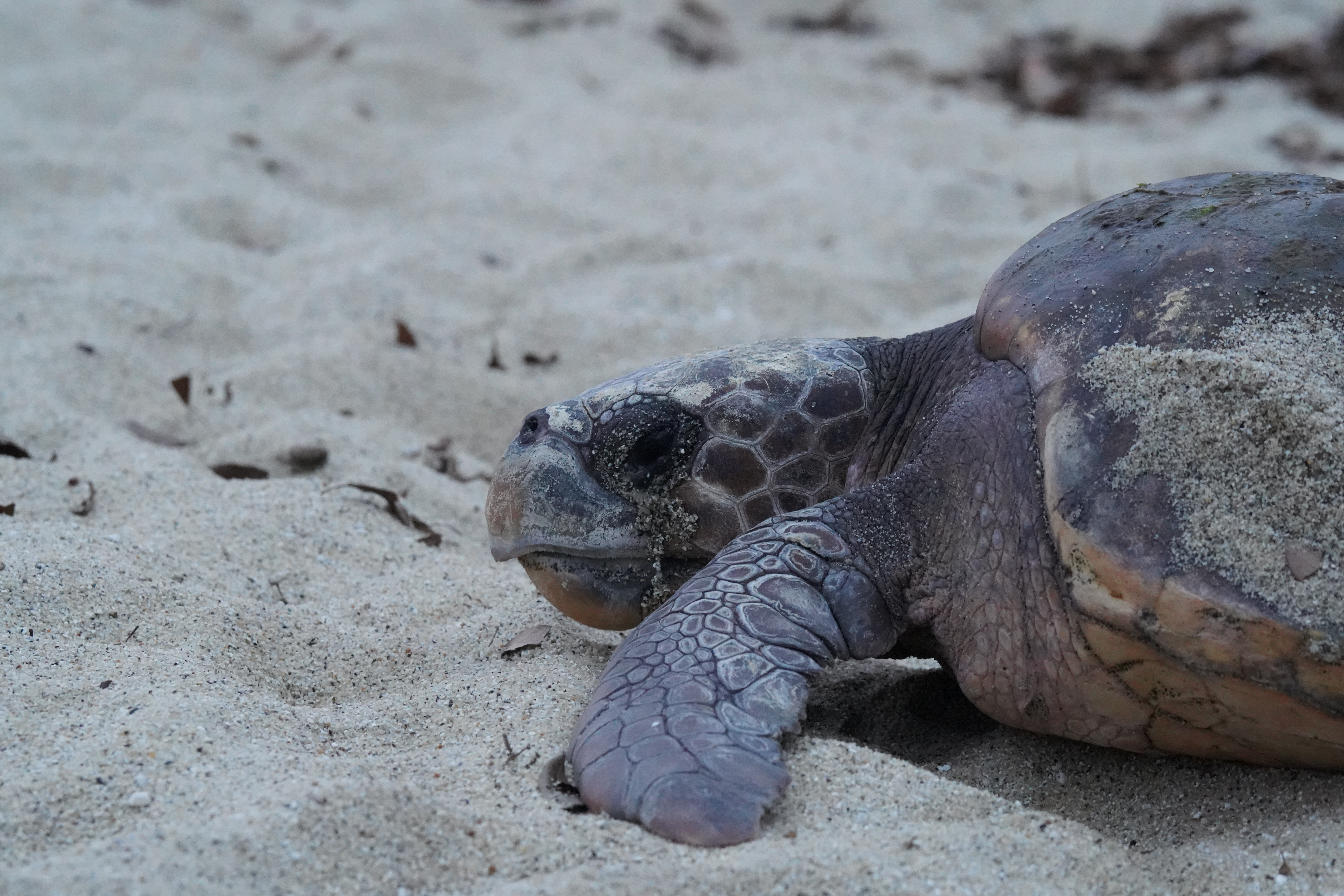
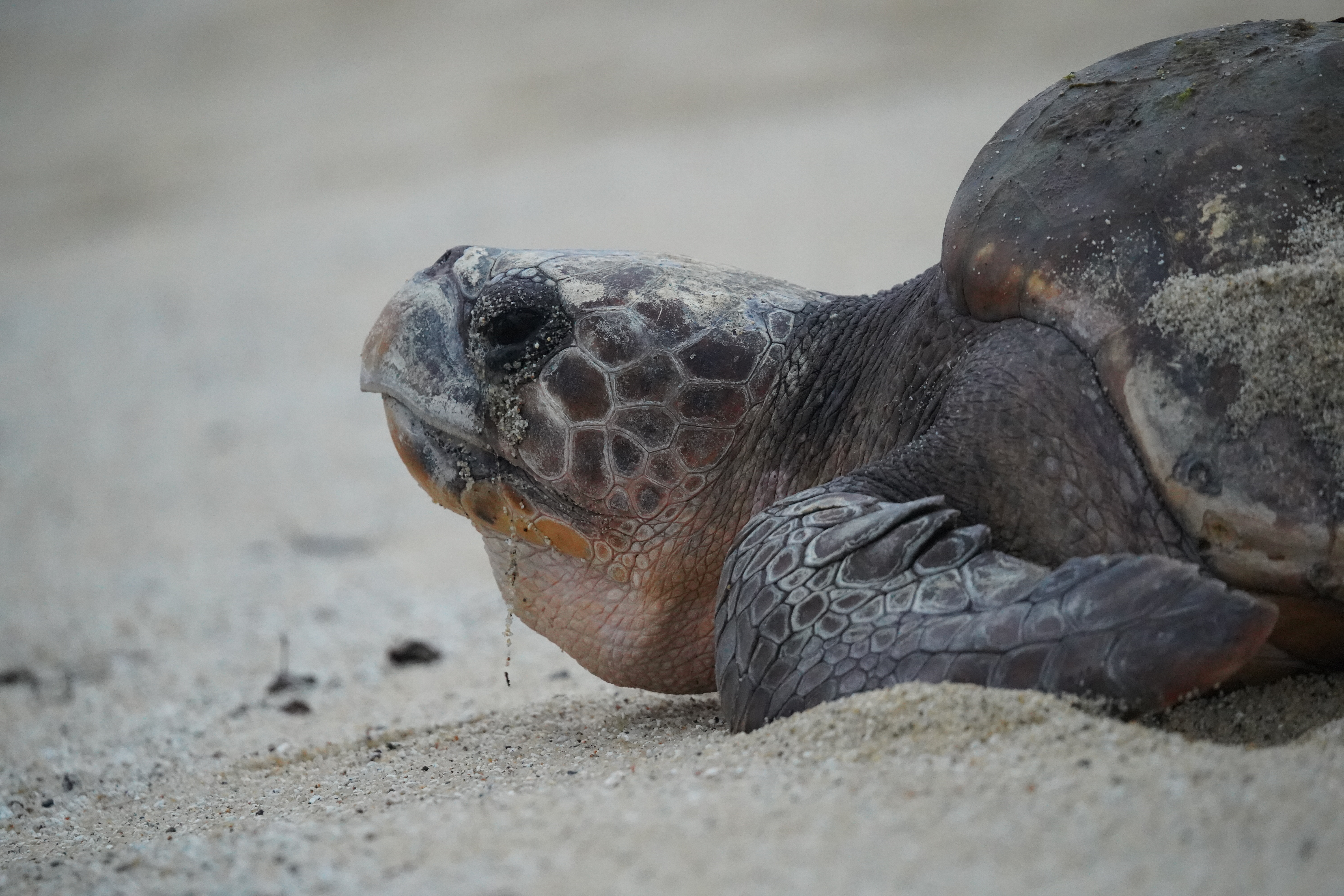
This article explores the conservation challenges facing loggerhead sea turtles in Yakushima, a major Japanese nesting site, by examining the threats facing the species and the actions needed to ensure the long-term protection of its nesting beaches.
Every year, loggerhead sea turtles (Caretta caretta) travel thousands of kilometres across the oceans before returning, sometimes several decades later, to the beach where they were born. This behaviour, known as philopatry, makes certain beaches irreplaceable breeding sites. Among them, the Japanese island of Yakushima holds an exceptional position. A true sanctuary for the species in the Northwest Pacific, it welcomes thousands of females every spring and summer as they come ashore to lay their eggs.
Yet despite their wide distribution, loggerhead sea turtles continue to face numerous threats to their survival. Their conservation depends not only on protecting individual turtles, but also on protecting the coastal habitats on which they depend and on the involvement of local communities.
An emblematic species in danger
The loggerhead sea turtle is one of the seven species of sea turtles found around the world. It occurs in the Atlantic, Indian and Pacific Oceans, as well as in the Mediterranean Sea. Females can travel thousands of kilometres between their feeding grounds and nesting beaches, where they return to lay their eggs every two to three years.
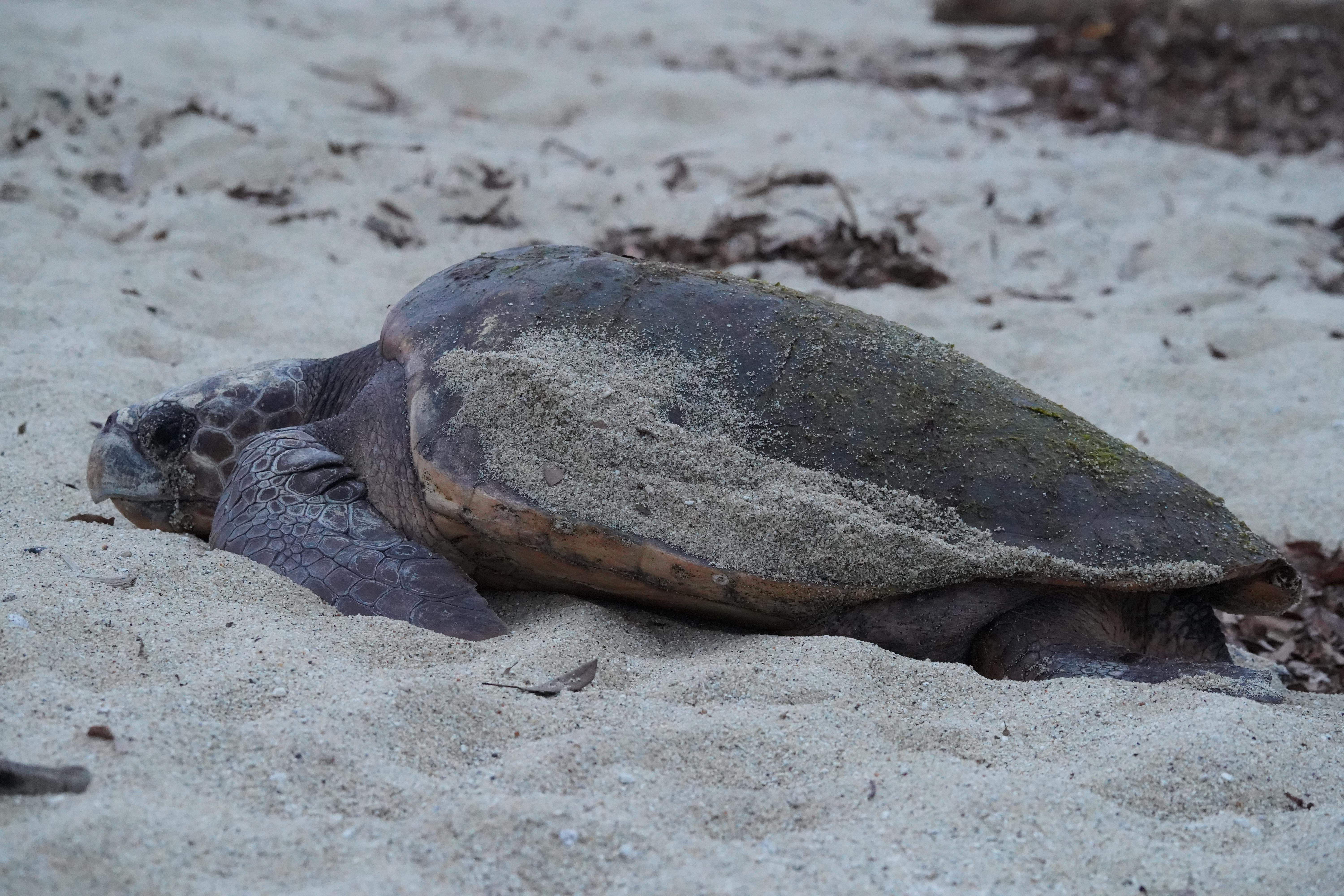 Photograph of a loggerhead sea turtle
Although widely distributed, the species is declining in many regions of the world. According to the International Union for Conservation of Nature (IUCN), the loggerhead sea turtle is classified as “Vulnerable” at the global level, while several regional populations are considered “Endangered” or “Critically Endangered”, notably due to declining reproductive success and adult mortality.
This situation is particularly concerning because sea turtles have a very slow life cycle. A female does not reach sexual maturity until she is twenty to thirty years old, or sometimes even older. Of the hundreds of eggs she lays throughout her lifetime, only a tiny proportion of hatchlings will survive to adulthood. The survival of reproductive females is therefore essential to maintaining populations.
Threats on a global scale
Loggerhead sea turtles face numerous pressures, many of them human-induced.
The first is bycatch in fisheries. Nets, trawlers and fishing vessels capture thousands of turtles every year, many of which drown or suffer severe injuries.
Plastic pollution is another major threat. Turtles can mistake plastic bags for jellyfish, leading to intestinal blockages, malnutrition or death. Microplastics are now found in many individuals.
Coastal development is also a major concern. Urbanisation, the construction of seawalls, rock armouring and artificial lighting alter nesting beaches and disrupt the orientation of both females and hatchlings. Coastal development often leads to unsuccessful nesting attempts: females may expend too much energy trying to make their way through plant debris and plastic waste towards a suitable nesting site and ultimately fail to lay their eggs.
Tourism and interactions with hatchlings also constitute a threat, even when they stem from good intentions. On some beaches, visitors attempt to “help” young turtles reach the sea by carrying them directly to the water. This intervention disrupts an essential natural process: by making their own way to the sea, hatchlings are exposed to their surroundings and may acquire information that contributes to their future orientation. This phase may in particular play a role in philopatry, the tendency of turtles to return, once they reach adulthood, to their region of origin to reproduce. Human handling can therefore disrupt their natural behaviour and, more broadly, alter the conditions necessary for the successful completion of their life cycle. The best thing to do is therefore often not to intervene and to allow hatchlings to reach the sea on their own.
Climate change further exacerbates these difficulties. Rising sea levels lead to beach erosion, while increasing sand temperatures directly influence the sex of embryos: higher temperatures produce more females, which could unbalance populations in the long term.
Finally, turtles still face local threats such as the poaching of eggs and adults, collisions with boats, and various forms of chemical pollution.
Yakushima: a major nesting site for loggerhead sea turtles
Located south of Kyūshū Island, in southwestern Japan, Yakushima is best known for its ancient forests, which are listed as a UNESCO World Heritage Site. Yet its beaches also play an essential role in marine biodiversity.
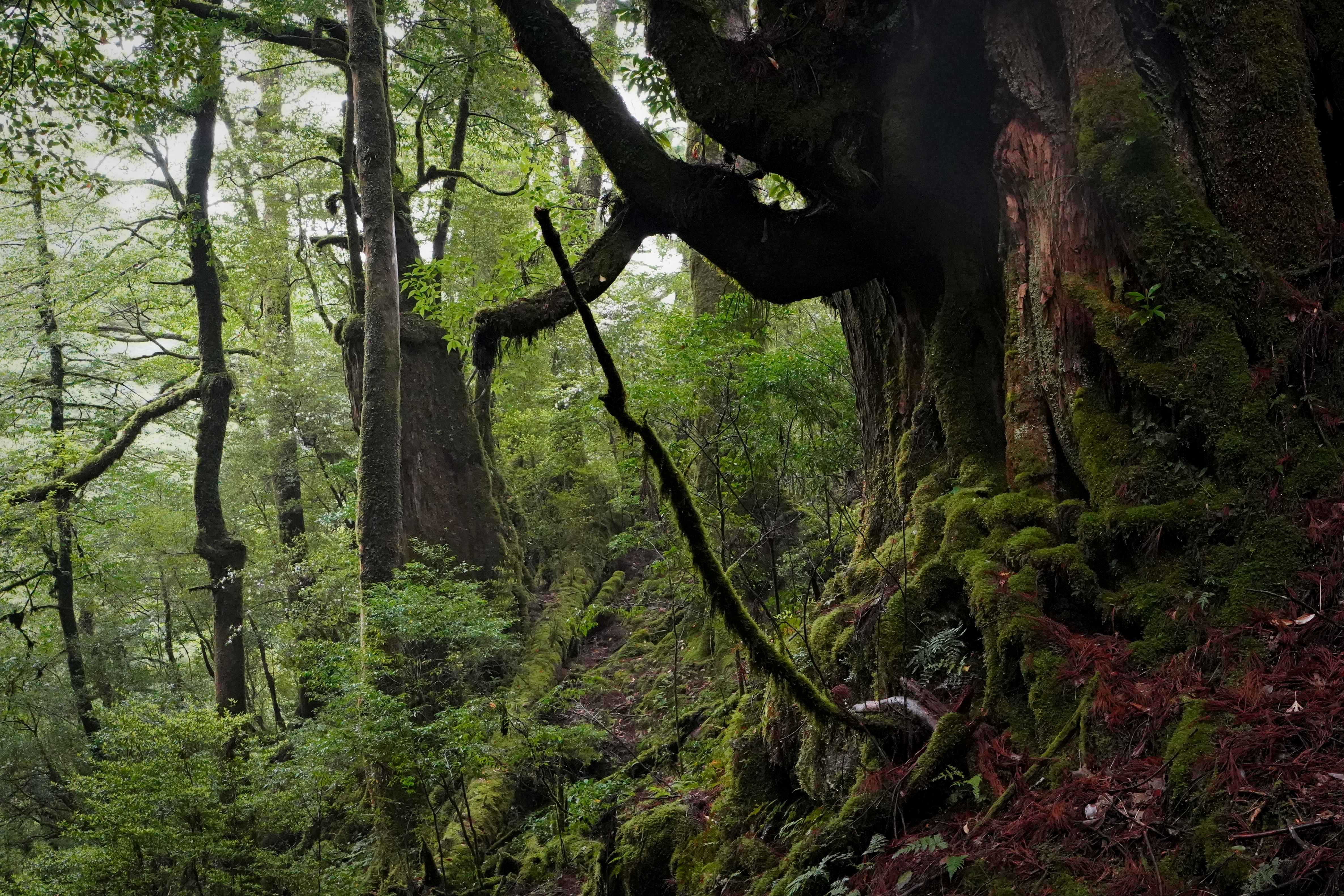 Yakusugi Forest, home to thousand-year-old trees and an iconic feature of Yakushima
Every year, between May and August, several thousand females come ashore to lay their eggs on the island’s sandy beaches, making Yakushima one of the most important loggerhead sea turtle nesting sites in the Northwest Pacific. Inakahama Beach is particularly remarkable and alone accounts for a significant proportion of the nesting activity recorded in Japan.
After approximately two months of incubation, young turtles emerge from the sand, mainly at night, and make their way towards the ocean by orienting themselves using the natural light of the marine horizon.
The importance of Yakushima extends far beyond Japan’s borders. Turtles born on these beaches subsequently migrate throughout the North Pacific, frequenting the waters of Japan, Taiwan, China and even the central Pacific. Protecting Yakushima’s beaches therefore directly contributes to maintaining this entire regional population.
An island facing numerous challenges
Despite its status as an exceptional natural site, Yakushima currently faces several threats.
Shoreline retreat is gradually altering some nesting beaches. Natural erosion is sometimes exacerbated by coastal structures built to protect human infrastructure, reducing the space available for nesting.
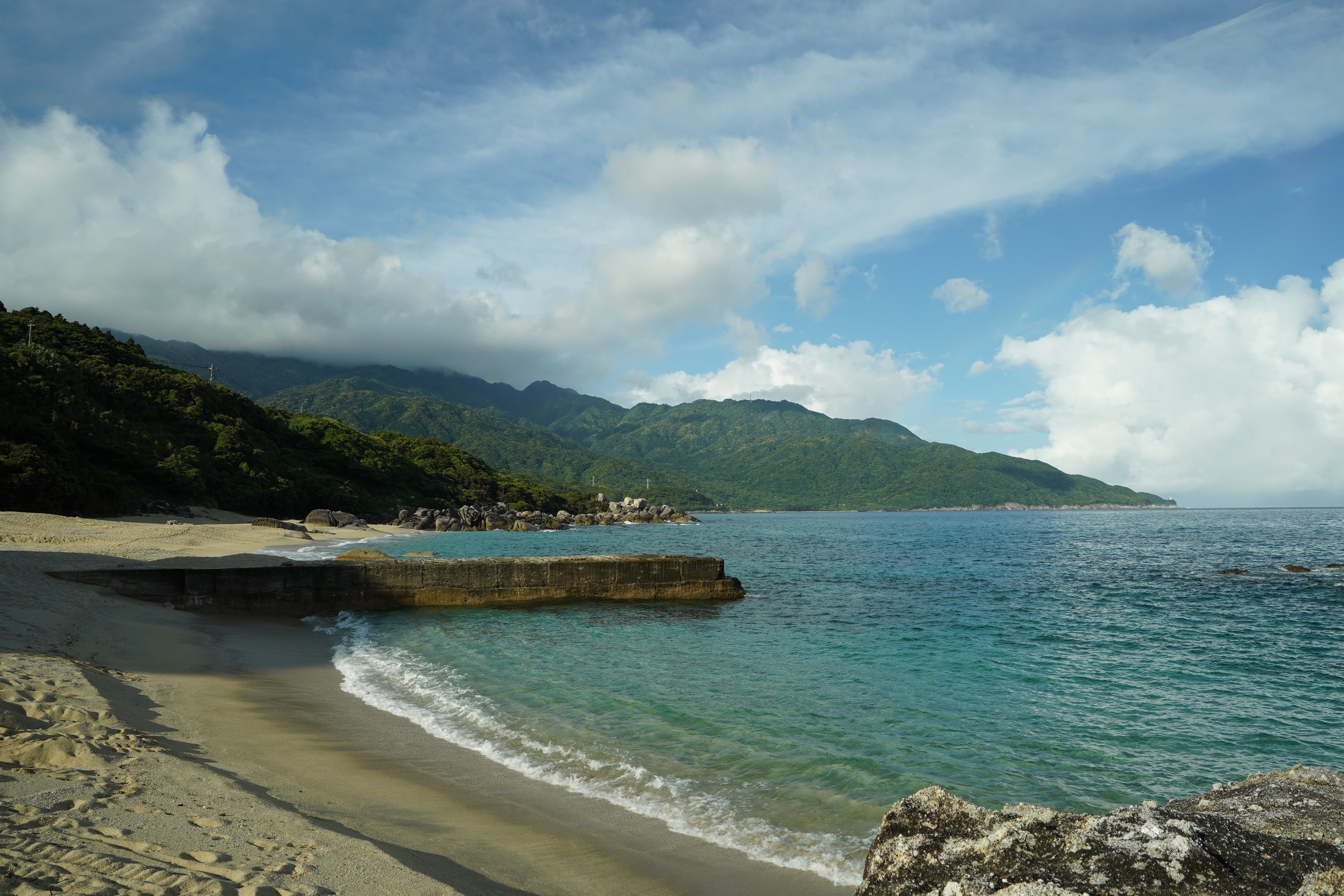 Structure installed on a turtle nesting site
Tourism development is also an increasing challenge. While tourism is an important economic resource for the island, excessive visitor numbers can lead to trampling of nests, disturbance of females during nesting, nocturnal light pollution and an accumulation of waste on the beaches.
Scientific monitoring also shows that the number of nesting events varies greatly from one year to another. These fluctuations are partly natural, but they also highlight the need for long-term monitoring in order to better understand population trends in the context of climate change.
Other, sometimes more indirect, environmental pressures must also be taken into account. On Yakushima, the health of coastal ecosystems can be affected by certain organisms introduced or favoured by human activities. One example is Monochamus alternatus, a longhorn beetle that acts as a vector for the pinewood nematode Bursaphelenchus xylophilus. This parasitic nematode colonises pine tissues and can cause rapid tree decline, eventually leading to the death of infected trees.
The decline and disappearance of pine trees can gradually alter coastal vegetation. Vegetation plays an important role in the stability and structure of nesting beaches: roots help retain sand, while certain plants contribute to dune formation, protecting areas further inland. Changes in this vegetation can therefore increase erosion or alter the characteristics of sites used by loggerhead sea turtles for nesting.
More broadly, changes in coastal vegetation and extreme weather events can alter beach structure, affect temperatures, or cause erosion and the burial of certain nesting areas. These changes can therefore reduce the quality of available nesting sites and indirectly affect egg survival and hatching success.
Local communities taking action
In response to these challenges, Yakushima is now a remarkable example of conservation based on collaboration between scientists, associations, local residents and authorities.
The Yakushima Umigame-kan (Yakushima Sea Turtle Museum) plays a central role in this approach. Working at this research centre, Professor Ueda raises public awareness about sea turtle biology, contributes to various scientific programmes and monitors breeding populations. He plays a major role in the conservation of the species.
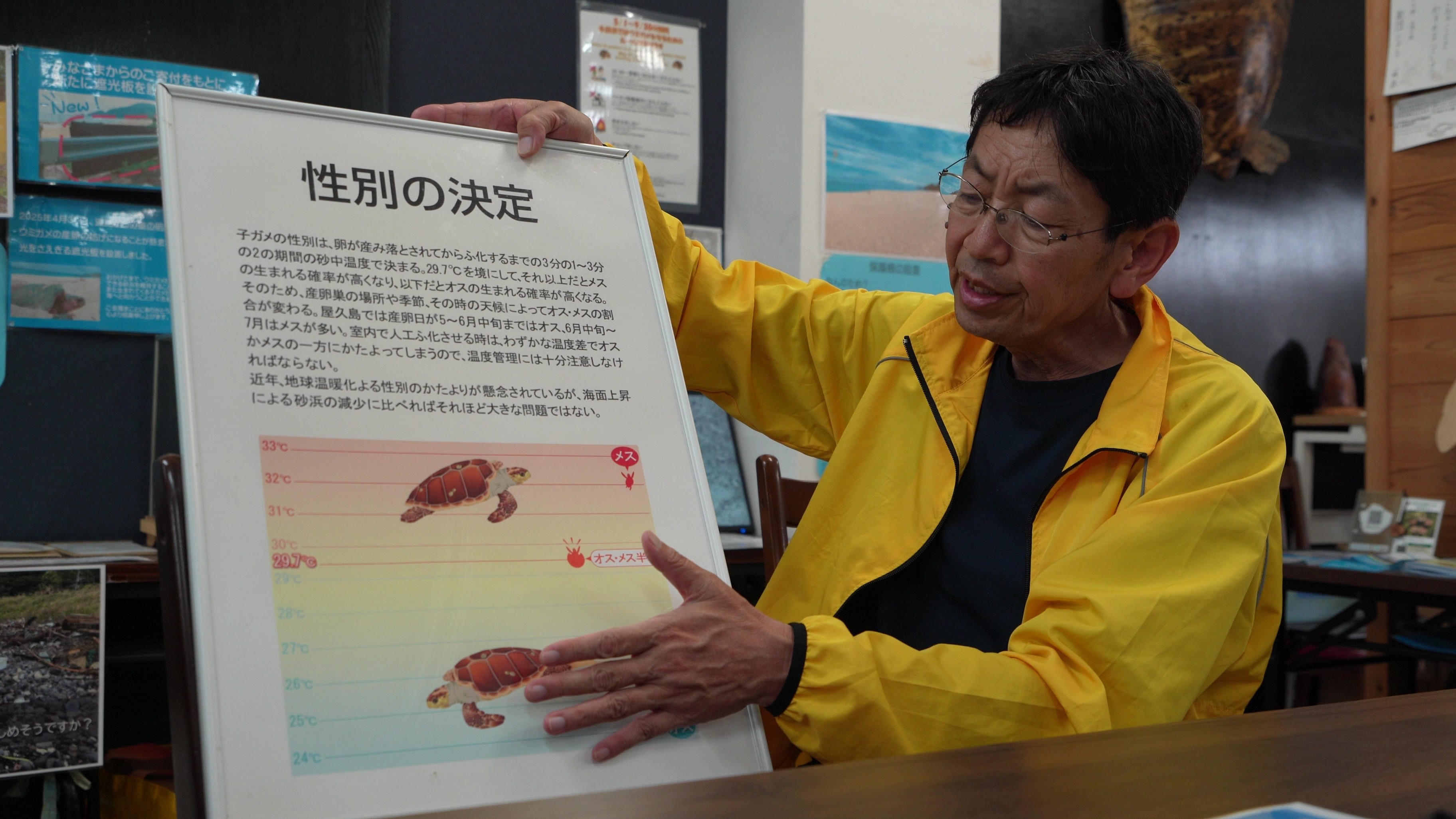 Prof. Ueda explaining the role of temperature in sex determination in turtles at the Yakushima Umigame-kan
During each nesting season, teams of researchers and volunteers carry out extensive fieldwork. The beaches are surveyed daily to record nesting females, locate nests, monitor hatching and estimate reproductive success. These data, collected over several decades, make it possible to assess population trends and adapt management measures.
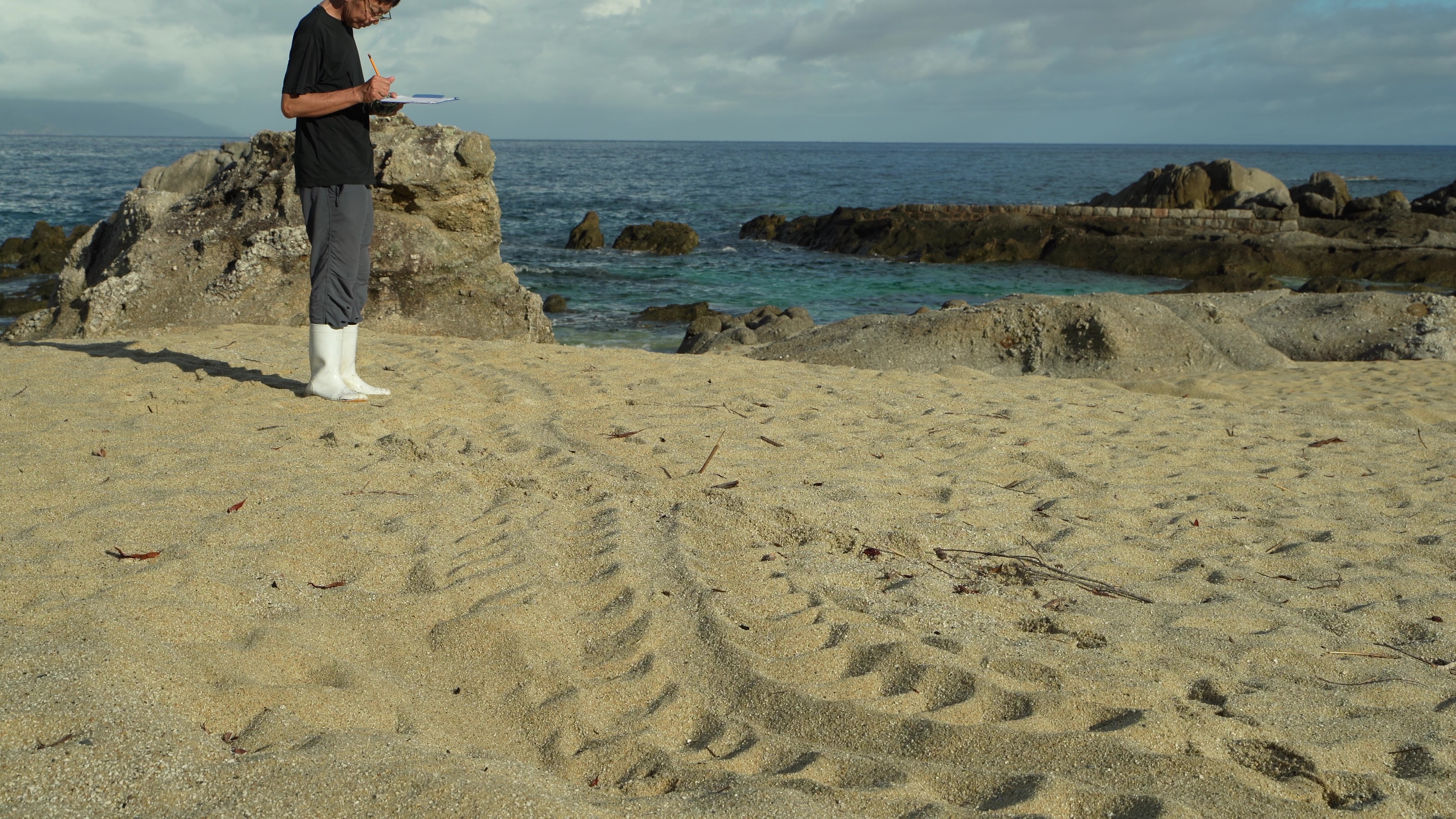 Survey of tracks left by turtles coming ashore to nest
Local associations also maintain a regular presence on the beaches during nesting and hatching periods. They inform visitors, supervise nighttime observations, minimise disturbance to nesting females and raise awareness about appropriate practices.
Actions are also carried out to preserve habitat quality, including limiting artificial lighting, cleaning beaches and protecting sensitive areas.
This local involvement demonstrates that effective conservation relies as much on scientific knowledge as on the commitment of those who live alongside this exceptional biodiversity.
Protecting a beach means protecting an ocean
The conservation of loggerhead sea turtles is not simply about protecting an emblematic species. It involves preserving beaches, dunes, seagrass meadows, feeding grounds and all the ecosystems on which they depend throughout their lives.
Yakushima perfectly illustrates this approach. Behind every protected nest lies a long-term effort combining scientific research, natural area management, public awareness and citizen engagement.
At a time when pressures on coastal environments continue to increase, this small Japanese island reminds us that long-term conservation is possible when science, local authorities and communities join forces around a common goal: allowing future generations to see turtles return every summer to the beaches where their story began.